Almost every serious electrical or mechanical fire is preceded by a period of abnormal heat — a loose busbar connection, a failing bearing, an overloaded cable, an unbalanced motor phase. Traditional annual thermographic surveys catch some of these anomalies, but a fault that develops between surveys can escalate to ignition long before an engineer next visits site. Permanent, in-situ thermal imaging closes that gap by watching critical assets 24/7.
How Fixed Thermal Monitoring Works
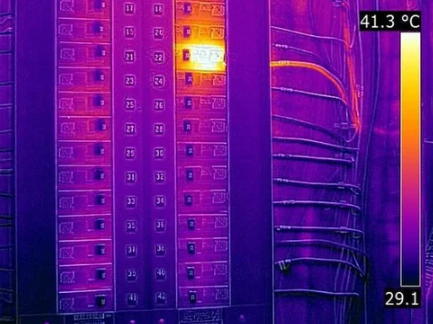
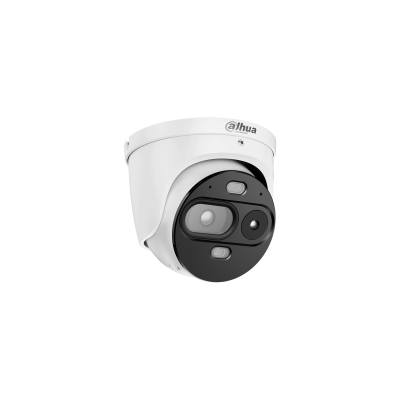
Compact radiometric thermal cameras are mounted inside switchrooms, transformer bays, motor control centres, battery storage rooms and plant enclosures. Each pixel is a calibrated temperature reading. The camera continuously compares the live thermogram against user-defined thresholds and rate-of-rise limits, then transmits an alert the instant a hot-spot develops.
- Radiometric accuracy: typically ±2 °C across the full scene, not just a spot reading
- Rate-of-rise detection: catches degrading joints long before an absolute threshold is crossed
- Zone masking: individual thresholds per busbar, breaker or motor within the same field of view
- Trend logging: months of data for predictive maintenance and insurer reporting
Where It Delivers the Greatest Value
- LV & HV switchgear: live monitoring of terminations, ACBs and busbar chambers behind closed doors — no need to open panels for a survey
- Battery Energy Storage Systems (BESS): early detection of thermal runaway in lithium cells, a growing 2026 insurance requirement
- Rotating plant: pumps, motors and gearboxes where a failing bearing signature appears hours before seizure
- Data centres: continuous supervision of PDUs, RPPs and CRAC units without disturbing IT operations
- EV charger farms and PV inverter rooms: heat is the primary failure mode in high-current DC equipment
Integration With Fire & Building Systems
A fixed thermal camera is only useful if the right person is told immediately. Systems are integrated with the site fire alarm panel via a monitored input, with the BMS for automated load-shedding, and with cloud dashboards or SMS/email for out-of-hours engineering response. Alarms can be escalated in stages — pre-warning at 60 °C, urgent at 75 °C, automated shutdown at 90 °C — giving facilities teams time to act before a fire ever starts.
Compliance & Insurance Benefits
- Supports the Regulatory Reform (Fire Safety) Order 2005 duty to reduce risk "so far as is reasonably practicable"
- Meets the growing number of insurer warranties requiring continuous thermal monitoring on BESS and LV distribution
- Reduces reliance on infrequent BS EN 60204 thermographic surveys as the sole safeguard
- Provides auditable evidence of condition to loss adjusters, HSE inspectors and lending banks
We specify, installs and commissions permanent thermal imaging across the South West — from single-panel protection in Bristol data suites to full switchroom coverage on Somerset industrial estates. Every deployment is designed alongside your fire detection strategy so that a thermal anomaly triggers action, not just an entry in a log file.
Talk to a Local Engineer
If you would like honest advice, a clear written quote, or help with compliance paperwork,get in touch with our team. We are a small, experienced South West team, and we look after every customer properly — no pushy sales, no hidden extras, and documentation you can rely on.