Rural theft is targeted, not opportunistic. The people taking GPS receivers off tractors, siphoning red diesel and lifting quad bikes have looked at the site first, know what is worth taking, and know how long they have. A single alarm on the barn does not address that.
What follows is how we approach farm security across Somerset and the wider South West — starting from the assets rather than from the equipment catalogue.
Start With the Loss Points, Not the Buildings
On most farms the same handful of items account for nearly all the loss:
- Bulk fuel — red diesel and AdBlue, taken in volume with a pump and a van.
- GPS guidance kits and displays — small, extremely valuable, and quick to unbolt from a cab.
- Quads, side-by-sides and compact plant — driven or trailered off in minutes.
- Workshop tools — welders, generators, power tools, chainsaws.
- Batteries, catalytic converters and scrap metal — low value each, but repeatedly targeted.
- Livestock and trailers — where access allows a vehicle to reach a gate.
Map those against where they are stored and you have your specification. Protecting a 200-acre perimeter is not realistic; protecting six specific points is.
Fuel Stores
- Physical first — a lockable tank cabinet or steel enclosure, anti-siphon devices and a good padlock in a shrouded hasp defeat casual attempts entirely.
- Level monitoring — a contents monitor that alerts on an unexpected overnight drop tells you a theft happened even if nothing else triggered, and shows the pattern if it is repeated.
- Local detection — an external detector or beam covering the tank approach, reporting to the main panel and your phone.
- Lighting and camera — a camera positioned to capture the approach and the vehicle plate, not just the tank. Detail on the number plate is worth more than wide coverage of an empty yard.
- Siting — where a new tank is going in, put it where it is overlooked and where a vehicle cannot reverse up to it unseen. Cheapest security measure available.
Machinery and Workshops
- Wireless shock sensors on workshop doors and shutters catch attack before entry.
- Internal detectors covering the tool wall and the bench, not just the doorway.
- Ground anchors and wheel clamps for quads and trailers — slow the removal and most will move on.
- Remove or lock away GPS displays and receivers overnight; a cab is not a safe.
- Trackers on high-value machinery, with subscription active and the details recorded.
- Forensic marking on tools, plant and metalwork, with the signage that goes with it — the deterrent value comes from the sign as much as the marking.
- A photographic asset register with serial numbers, kept off-site. It transforms both the insurance claim and the chance of recovery.
Perimeter and Approach Detection
The aim is not a fence around the farm. It is knowing that a vehicle is on the track before it reaches the yard.
- Driveway and track detection — a detector or beam on the access route giving you warning while an intruder is still hundreds of metres out.
- Point-to-point beams — across gateways, between buildings and along yard boundaries. Reliable in weather and largely immune to wildlife when set correctly.
- Ground loop and buried sensors — detect a vehicle rather than an animal, which is exactly what you want on a farm track.
- External detectors and dual-technology units — around yards and building approaches, chosen and set to tolerate livestock, foxes and blowing straw.
- Physical measures — a locked gate, a bank, a ditch or a parked implement across the access is often the most cost-effective element of the whole scheme.
Getting the Alert to Someone Who Will Act
Detection with no response is only useful for the insurance claim. The realistic options on a rural site are app notification to the farmhouse and to family, an audible sounder and floodlight at the point of detection, monitoring by an alarm receiving centre with keyholder escalation, or video-verified response where cameras confirm a person before escalation. On isolated sites, video verification is generally the most useful, because it separates a genuine intruder from a badger and gets you a credible report rather than an unconfirmed activation.
Signalling and power on remote buildings are covered in detail in rural CCTV that actually works.
Working Around Farm Realities
A system that cannot cope with a working farm gets switched off. That means detectors selected and positioned to tolerate cats, birds and livestock; areas that can be part-set so the workshop can be alarmed while the yard is in use at 5am; equipment rated for dust, damp and temperature swings; and cabling protected against rodents. It also means the system has to be simple enough to set from the cab or the phone, not from a keypad by a door nobody uses.
For related reading, see our posts on wireless alarms for Somerset farms and CCTV surveillance, plus intruder alarm systems for the detection side.
Frequently Asked Questions
How do you protect a red diesel tank from theft?
Layer it: a physical enclosure or lockable cabinet, a tank-level alarm or contents monitor that flags an unexpected drop, local detection such as a beam or external detector covering the approach, and a camera positioned to capture faces and vehicle plates rather than just a shape in the dark.
Can you alarm a barn with no mains power?
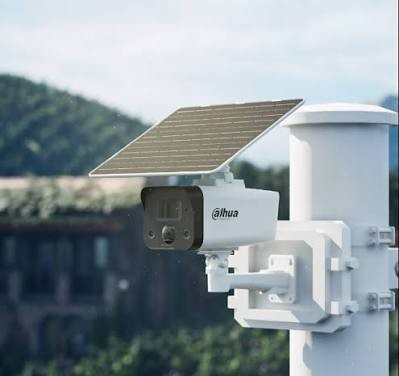
Yes. Wireless detectors with long-life batteries, solar-supported power and 4G signalling let us cover outbuildings with no power and no broadband. Range between buildings is handled with repeaters or a wireless link back to the main site.
Are driveway alarms worth fitting on a farm?
They are one of the highest-value items on a rural site. A detector on the track gives you warning while a vehicle is still several hundred metres out, which is the difference between reacting and discovering the damage in the morning. Notification goes to the app or a chime in the house.
Does farm security reduce insurance premiums?
It varies by insurer, but rural policies frequently attach conditions on machinery, fuel and tool storage, and meeting or exceeding them is what keeps cover in place after a claim. Ask your broker what they will recognise before specifying, and get the installation certificated.
Talk to a Local Engineer
We will walk the yard with you, look at what has actually gone missing or nearly gone missing, and put together a phased plan — fuel and workshop first, approach detection next, wider coverage after. No pressure to do it all at once.