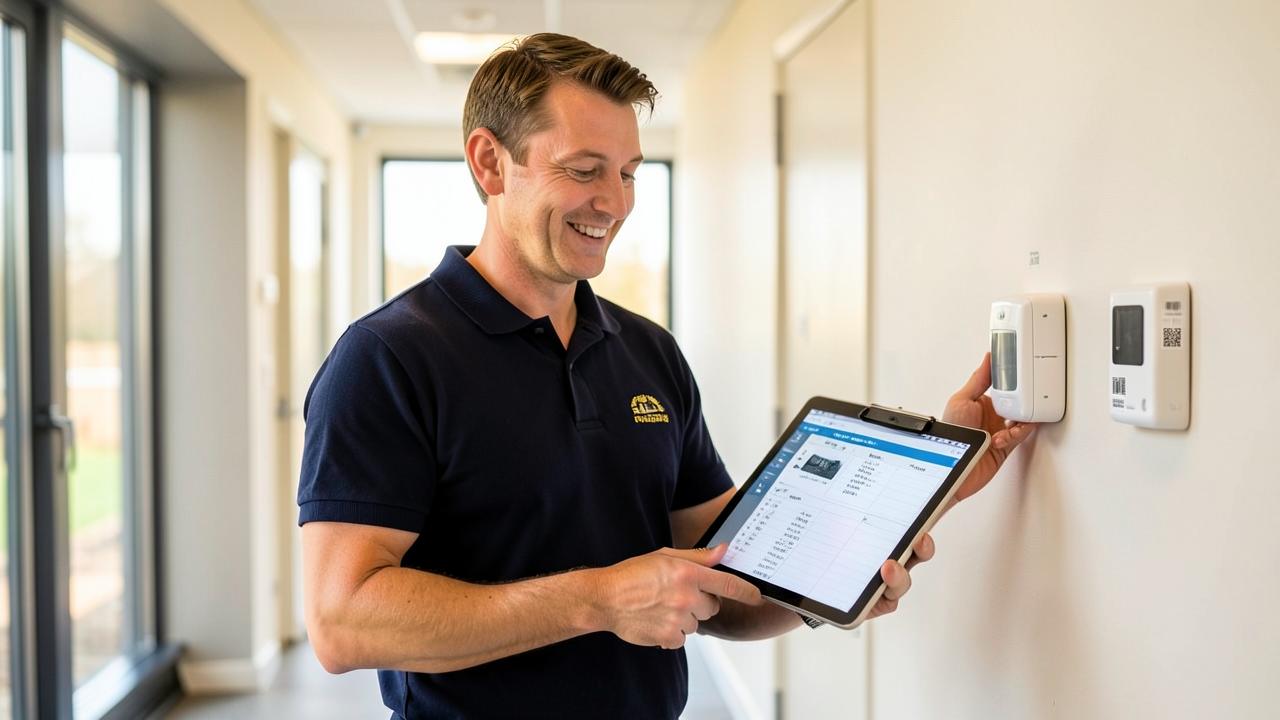
Ask most maintenance companies what you have on site and you will get an answer like "a four-zone fire alarm and some emergency lights". Ask us and you will get a list of every individual device — each smoke detector, each emergency light fitting, each PIR and door contact — where it is, how old it is, and what happened the last time it was tested.
That difference sounds like admin. In practice it changes what your maintenance is worth. Here is why we build a full digital asset register into the first service of every contract, free of charge, and why we report pass and fail results per device rather than per system.
System-Level Reporting Hides the Detail That Matters
A certificate that says "fire alarm serviced, satisfactory" tells you almost nothing. Which of the sixty detectors failed its sensitivity check? Which two emergency lights did not reach their three-hour duration? Which sounder is quieter than the rest of the zone? When the answer is buried in a single overall verdict, the failures either get missed or get lost in a follow-up phone call nobody wrote down.
Device-level reporting removes the hiding place. Every item on your register gets its own result on every visit:
- Pass — tested, working, dated, done. You can show it to anyone.
- Fail — with the reason in plain English — "contaminated optical chamber", "battery holding 41 minutes of a required 180", "contact misaligned on stockroom door".
- A fixed remedial price attached to the failure — so a defect arrives with its solution and its cost, not a vague recommendation to "monitor".
Where It Earns Its Keep
The register is not a document you frame. It is a working tool, and we see it pay off in the same five places over and over:
- Insurance claims. After a fire or a break-in, the first question is usually "prove the system was maintained". A device-level history answers it in one email.
- Fire risk assessments and audits. Your assessor can see exactly what is fitted and how it has performed, which shortens the assessment and removes the guesswork that produces cautious, expensive recommendations.
- Faster, cheaper fault repairs. When a fault appears on the panel, we know the device, its type and its age before we arrive — so we bring the right part the first time instead of charging you for a diagnostic visit.
- Budgeting. Detectors and batteries have working lives. The register shows which devices are approaching end of life, so replacement becomes a planned line in next year's budget rather than an emergency invoice.
- Handovers. When a building changes manager, tenant or owner, the history goes with it — no more inheriting a system nobody knows anything about.
What a Register Line Actually Looks Like
To make it concrete, a typical section of a report reads like this:
- Smoke detector (optical), ground floor corridor outside office 2 — PASS
- Manual call point, main entrance lobby — PASS
- Emergency light (3hr maintained), stairwell between floors 1–2 — FAIL, battery duration 68 mins, replacement quoted
- PIR detector, rear stockroom — PASS
- Door contact, fire exit to car park — PASS
Multiply that by every device on site and you have a document an insurer, an auditor or a landlord can act on without ever visiting the building — and a running history that gets more valuable with every visit.
It Works Alongside the Digital Logbook
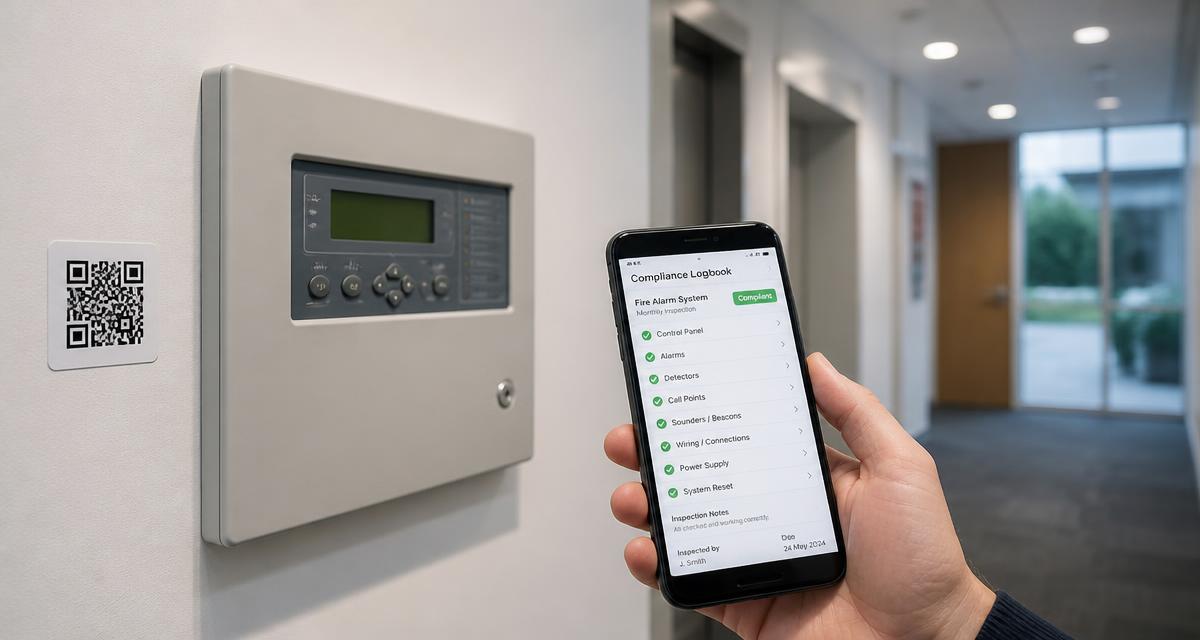
The register records what you have and how each device performs; the free QR-scannable digital logbook records the routine checks in between — weekly call point tests, monthly emergency lighting flick tests, service certificates. Together they mean the entire compliance story of the building lives in one place, down to the last detector.
Why a Smaller Company Bothers With This
Building a register properly takes time on the first visit — walking every floor, logging every device, labelling as we go. Larger national contractors often skip it because their engineers never see the same site twice. We are small enough that the engineer who builds your register is the engineer who comes back, so the detail is worth having. Adam and Jack set the company up to work that way, and it is one of the reasons our contract customers stay.
Frequently Asked Questions
What is a device-level asset register?
It is a full list of every individual item of fire and security equipment on your site — not just 'fire alarm system' but each smoke detector, heat detector, manual call point, sounder, emergency light fitting, PIR sensor, door contact and camera, with its location, type, age and test history. It becomes the master record that every service visit updates.
Is a device-level register a legal requirement?
The law requires you to maintain fire safety equipment and evidence the maintenance, but it does not prescribe the format. A device-level register is simply the most practical way to prove it: when a fire officer or insurer asks when a particular detector was last tested, the answer is one line in a report rather than a search through folders.
Do you charge extra for building the asset register?
No. With any Affinity service contract, the first service includes building the full digital asset register free of charge. We walk the site, label and log every device, and issue it as a PDF you keep. It is yours — if you ever move to another maintainer, it goes with you.
What does a pass/fail report actually show?
Every device tested gets its own line: location, device type, result, and a plain-English note if it failed — for example 'Smoke detector, first floor landing, outside store room — FAIL, contaminated chamber, replacement quoted'. Nothing is hidden inside an overall 'system passed' statement.
How does this help with insurance claims?
After a fire or break-in, insurers commonly ask for proof that detection and alarm equipment was maintained. A device-level report shows exactly what was tested, when, and the result — which removes the ambiguity that delays or reduces payouts.
Does this apply to small sites, or only large buildings?
It matters most on smaller sites. A shop with forty devices or a small office with eighty has no facilities manager to remember what was fitted where. The register does that job, and because we build it during the first service, it costs the owner nothing in time.
Getting One for Your Site
There is nothing to buy separately. The asset register is built free of charge during the first service of any Affinity contract, and every visit after that updates it with device-by-device pass and fail results. You can read exactly what is included on our digital asset register page, see how it fits into a service contract, or ask for a maintenance quote and we will start with a survey.