An L1 fire alarm system provides the highest level of automatic fire detection available under BS 5839-1. It requires automatic detectors in every area of the building — including roof voids, risers, ceiling voids, and cupboards — to give the earliest possible warning of fire and protect life. For Bristol commercial properties where a fire risk assessment demands maximum coverage, L1 is the definitive compliance solution.
What Does L1 Mean Under BS 5839-1?
BS 5839-1:2017 defines Category L1 as a system designed to give the earliest possible warning of fire to facilitate safe evacuation. Unlike lower categories such as L2 or L3, an L1 system places automatic fire detectors in all areas of the building, with very few exceptions. This includes:
- All rooms, corridors, and circulation spaces
- Roof voids and ceiling voids exceeding 800mm in height
- Risers and service shafts
- Cupboards and storage areas exceeding 1m²
- Lift shafts (where practicable)
- Areas beneath raised access floors where combustible cabling is present
The only permitted exclusions are toilets, bathrooms, and areas where detection would cause persistent false alarms with no practical mitigation — and even these exclusions must be justified in the system design documentation.
When Is L1 Legally Required in Bristol?
The Regulatory Reform (Fire Safety) Order 2005 places a legal duty on the responsible person — typically the employer, building owner, or managing agent — to ensure appropriate fire detection and warning arrangements are in place. The specific system category is determined by the fire risk assessment, not by a default standard. L1 is typically required or recommended in the following circumstances:
- Houses in Multiple Occupation (HMOs) — Bristol City Council licensing conditions frequently mandate L1 protection for licensable HMOs, particularly those with three or more storeys
- Care homes and residential care premises — Where occupants may have limited mobility or awareness, L1 provides the earliest possible detection to support assisted evacuation
- Premises with sleeping accommodation — Hotels, hostels, serviced apartments, and student accommodation in Bristol often require L1 under the fire risk assessment
- Complex escape routes — Buildings where the escape route geometry is complicated by split levels, long travel distances, or limited exits
- Enforcing authority requirements — Avon Fire and Rescue Service may issue an enforcement notice or informal recommendation specifying L1 following an inspection
- Insurer requirements — Some commercial insurers require L1 combined with P1 property protection as a condition of cover
L1 vs L2 vs L3: Understanding the Differences
Choosing the correct system category is one of the most important decisions in fire alarm design. The three most commonly specified life protection categories are:
| Category | Coverage | Typical Application |
|---|---|---|
| L1 | All areas of the building | HMOs, care homes, sleeping risk, complex buildings |
| L2 | Escape routes + defined high-risk rooms | Multi-tenanted offices, mixed-use buildings |
| L3 | Escape routes only | Low-risk single-occupancy offices, retail units |
Under-specifying the system category is one of the most common compliance failures our engineers identify during audits of Bristol commercial premises. If your fire risk assessment recommends L1 but your existing system provides only L2 or L3 coverage, you are non-compliant and potentially liable for enforcement action.
Legal Obligations for the Responsible Person
Under the Regulatory Reform (Fire Safety) Order 2005, the responsible person must:
- Commission a suitable and sufficient fire risk assessment
- Implement the fire risk assessment's recommendations, including the specified alarm category
- Ensure the fire alarm system is installed by a competent contractor in accordance with BS 5839-1
- Maintain the system through regular weekly testing and professional servicing
- Keep documented records of all testing, maintenance, and faults in a fire alarm log book
Failure to comply can result in enforcement notices, prohibition notices (which can close your premises immediately), and criminal prosecution. In serious cases, responsible persons have received custodial sentences for fire safety failures that contributed to loss of life.
Design Considerations for L1 Systems in Bristol
Bristol's commercial property stock presents specific challenges for L1 fire alarm design:
- Listed buildings and conservation areas — Properties in Clifton, the Old City, and Queen Square may require careful coordination with conservation officers regarding detector placement and cable routing. Wireless fire alarm systems can reduce the need for intrusive cabling in heritage buildings
- Mixed-use buildings — Bristol's trend toward live-work and mixed commercial-residential use creates complex zoning requirements where different parts of the building may need different detector types and alert strategies
- Converted properties — Georgian and Victorian conversions are common in Bristol. These buildings often have concealed voids, irregular ceiling heights, and complex compartmentation that demand experienced design input
- High ceilings and open spaces — Warehouse conversions in the harbourside and Temple Quarter may require beam detectors or aspirating smoke detection rather than standard point detectors to achieve effective coverage at height
What an L1 Installation Involves
Installing a Category L1 fire alarm system is a comprehensive undertaking that includes:
- Site survey and fire risk assessment review — Confirming the L1 requirement and identifying all areas requiring detection
- System design — Producing detailed layout drawings with detector positions, loop architecture, cable routes, and a cause-and-effect specification for integration with emergency lighting, smoke ventilation, and other building systems
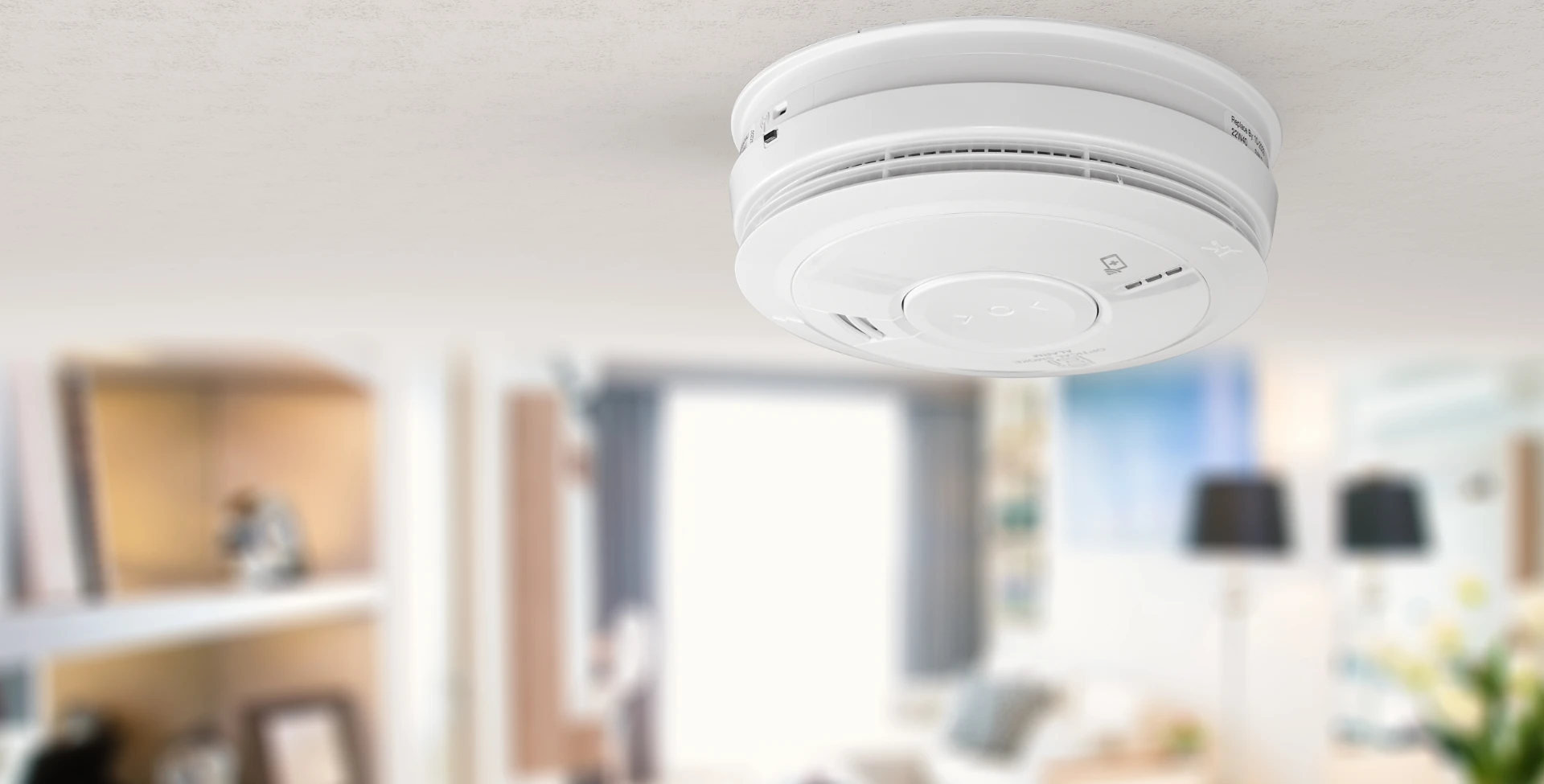
- Equipment selection — Choosing appropriate detector types for each environment. A typical L1 system will use a combination of optical smoke detectors, heat detectors, and multi-sensor detectors depending on the space
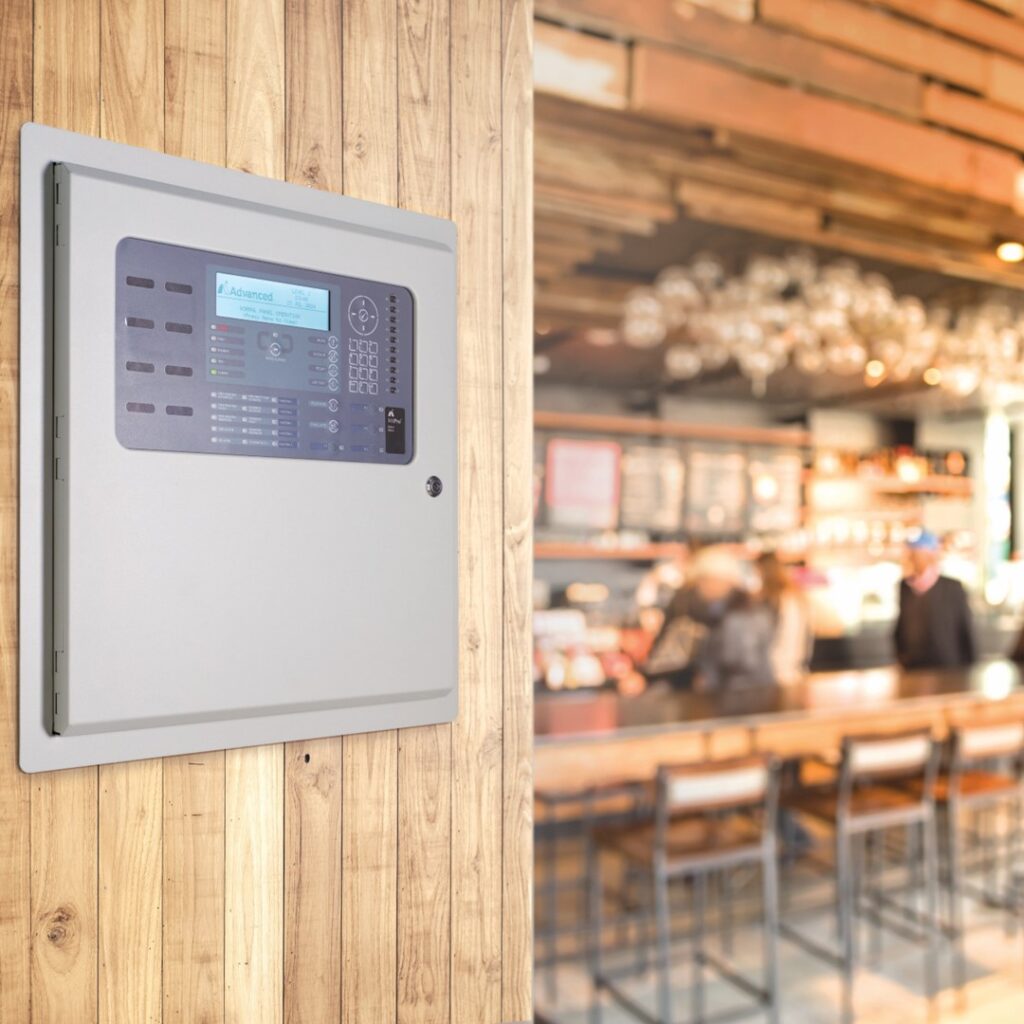
- Installation — Running fire-resistant cabling, mounting devices, installing the fire alarm control panel and any repeater panels, sounders, and visual alarm devices
- Commissioning — Testing every device, verifying loop integrity, checking sounder levels meet the 65dBA / 75dBA requirements, and confirming all cause-and-effect functions operate correctly
- Handover — Providing as-built drawings, commissioning certificates, a BS 5839-1 certificate of compliance, and a fire alarm log book
We work with experienced addressable fire alarm manufacturers including Advanced, Apollo, Hochiki, and Kentec to deliver reliable L1 systems tailored to each premises.
Maintaining L1 Compliance After Installation
Installation is only the first step. BS 5839-1 requires ongoing maintenance to keep your L1 system compliant:
- Weekly testing — A different manual call point should be tested each week on a rotational basis, with the result recorded in the log book
- Quarterly inspections — A competent person should inspect the system, check for faults, verify the log book is up to date, and test a proportion of automatic detectors
- Annual servicing — A full inspection and test of every device in the system by a BS 5839-1-certificated contractor. Read our guide to fire alarm servicing frequencies for more detail
- Detector replacement — Smoke detectors should be replaced within 10 years of manufacture; heat detectors within 15 years. Detectors beyond their service life compromise the integrity of your L1 system
We provide planned preventative maintenance contracts that cover all BS 5839-1 servicing requirements, keeping your L1 system fully compliant year-round.
Why Choose Affinity Fire & Security for L1 Fire Alarm Installation in Bristol?
As a specialist contractor working to BS 5839-1, backed by a team with 25+ years of industry experience, We provide the specialist design and installation capability that L1 fire alarm systems demand. Our quality assurance means every system is independently audited against the highest industry standards.
Whether you need a full L1 installation for a new Bristol premises, an upgrade from L3 or L2 to L1 following a fire risk assessment, or a compliance audit of an existing system, our qualified engineers will deliver a solution that meets your legal obligations and protects your occupants. For high-rise residential buildings, we also install BS 8629 evacuation alert systems to meet the latest regulatory requirements.
Get in touch with our team for a free, no-obligation site survey and quotation for L1 fire alarm installation in Bristol and across the South West.
Talk to a Local Engineer
If you would like honest advice, a clear written quote, or help with compliance paperwork,get in touch with our team. We are a small, experienced South West team, and we look after every customer properly — no pushy sales, no hidden extras, and documentation you can rely on.