Domestic fire alarms are the one piece of safety equipment nearly every home has and almost nobody has had explained. The guidance lives in BS 5839-6, and once you strip the jargon out it is genuinely simple: how much of the house is covered, what type of sensor goes where, and how the alarms are powered and linked together.
Coverage: The LD Categories
BS 5839-6 describes coverage in categories. For homes, the ones that matter are LD1, LD2 and LD3.
- LD3 — detection in circulation spaces that form part of the escape route: the hallway and each landing. The minimum for warning people to get out, but it only detects a fire once smoke has reached the hall.
- LD2 — LD3 plus detection in rooms presenting a higher fire risk, normally the living room (upholstery, electronics, open fires) and the kitchen (with a heat alarm). This is the sensible target for most family homes and is commonly specified for rented property.
- LD1 — detection in all circulation spaces and in every room where a fire could start, excluding bathrooms and shower rooms. Used for houses in multiple occupation, larger properties, sheltered accommodation and situations where occupants may be slower to escape.
A three-storey house, a loft conversion, or an inner room that can only be escaped through another room all push the requirement upwards — as does anybody in the household who would need help to get out.
Which Sensor Goes Where
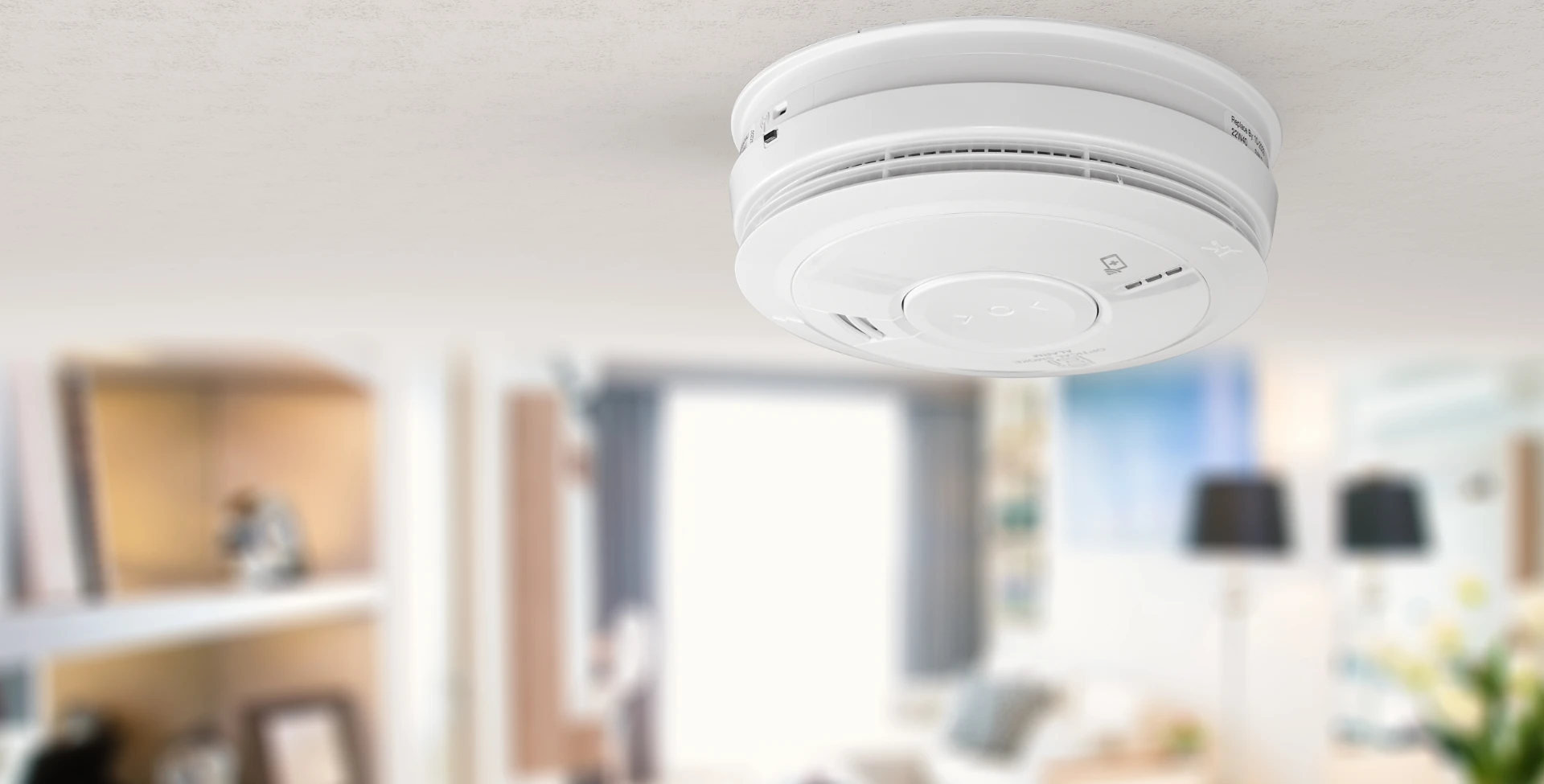
- Optical smoke alarms — best for smouldering fires, which is the typical residential fire in furniture, bedding and electrical goods. The right choice for hallways, landings, living rooms and bedrooms.
- Ionisation smoke alarms — respond quickly to fast flaming fires but are highly prone to nuisance activation from cooking. Rarely specified for new domestic installations now.
- Heat alarms — for kitchens, and often garages and utility rooms. They trigger on a rapid temperature rise rather than smoke, so cooking does not set them off.
- Multi-sensor alarms — combine optical and heat sensing, which suits open-plan homes where the kitchen and living space share a ceiling.
- Carbon monoxide alarms — a separate matter entirely. Required in England in any room with a fixed combustion appliance other than a gas cooker; sensible in every home with a gas boiler, wood burner or open fire.
Positioning Rules Worth Knowing
- Mount alarms on the ceiling, as centrally in the space as practical.
- Keep at least 300mm from walls and light fittings — the air right in the corner barely moves.
- Do not fit smoke alarms in bathrooms or shower rooms; steam is indistinguishable from smoke to an optical sensor.
- Avoid the immediate vicinity of an extractor, an open window or a draughty stairwell top.
- Fit one within about three metres of every bedroom door, so a sleeping occupant is woken.
- On a stairwell, the alarm goes at the top so rising smoke reaches it early.
Power and Interlinking
Interlinking is the single most valuable feature in a domestic system. If a fire starts in the kitchen at 2am, an isolated alarm downstairs may not wake anyone upstairs. Interlinked alarms all sound together.
- Mains-powered with battery backup (Grade D1) — the target for new build, rewiring, extensions and any major refurbishment. Interlinked by cable or radio.
- Sealed ten-year lithium, radio-interlinked (Grade F1) — an effective retrofit where cabling would mean lifting floors and chasing walls. The battery cannot be removed, which eliminates the classic failure of a unit borrowed for a TV remote.
- Replaceable-battery standalone alarms — the weakest option, and the one most commonly found flat or with the battery removed after a cooking activation.
Rented Property: Landlord Duties
In England, landlords must provide at least one smoke alarm on every storey used as living accommodation, and a carbon monoxide alarm in any room containing a fixed combustion appliance other than a gas cooker. Alarms must be tested at the start of each new tenancy and repaired or replaced once the landlord is told they are not working.
That is the legal floor. In practice, many local authorities, letting agents and insurers expect an LD2 interlinked system, and houses in multiple occupation generally require considerably more — often an LD1 mains-interlinked system, and in some cases a small BS 5839-1 panel-based installation. If you let property across Somerset, our post on fire alarm maintenance essentials for Somerset landlords covers the ongoing obligations.
Testing, Cleaning and Replacement
- Test every alarm weekly with the test button — it takes under a minute for a whole house.
- Vacuum the casing gently every few months; dust and insects are a leading cause of false alarms.
- Never remove an alarm because it activates during cooking — move it, or change it to the correct sensor type.
- Replace alarms roughly every ten years. Sensors degrade, and most units have a manufacture date printed on the back.
- Landlords should record tests at the start of each tenancy, and keep the record.
When You Need More Than Domestic Alarms
Once a property is a house in multiple occupation, a flat above a commercial unit, a guest house or any building where people sleep who are not a single household, you are usually into BS 5839-1 territory with a control panel, call points and a system that is serviced and certificated. That is a different specification, and one worth getting designed properly — see our fire alarm installation service and maintenance and remedials.
Frequently Asked Questions
What does LD1, LD2 and LD3 mean?
They are coverage categories in BS 5839-6. LD3 covers escape routes only — typically hallways and landings. LD2 adds detection in rooms presenting a higher fire risk, such as the living room and kitchen. LD1 is detection throughout all circulation spaces and rooms where a fire might start, excluding small spaces like bathrooms.
Do landlords have to fit smoke alarms in England?
Yes. In England, regulations require at least one smoke alarm on every storey of a rented property used as living accommodation, and a carbon monoxide alarm in any room with a fixed combustion appliance other than a gas cooker. Alarms must be repaired or replaced once the landlord is told they are faulty, and tested at the start of each new tenancy.
Can I put a smoke alarm in the kitchen?
A standard optical smoke alarm in a kitchen will be set off by toasting and frying. Kitchens are protected with a heat alarm instead, which responds to a rapid rise in temperature. The heat alarm should still be interlinked with the rest of the alarms in the property.
Should home alarms be mains-powered or battery?
For new installations, mains-powered interlinked alarms with a battery backup are the specification to aim for, because they cannot be left flat and they all sound together. Sealed ten-year lithium interlinked alarms are a reasonable retrofit where running cable is impractical, and are far better than replaceable-battery units.
Talk to a Local Engineer
If you are not sure whether your home or rental property meets the mark, we will walk through it with you and give you a plain list of what is missing and what it costs to put right. Usually it is a couple of alarms and a linked upgrade rather than anything dramatic.