
As of 1 April 2026, the UK government has launched the £62.7 million Interim Measures Alarm Fund (IMAF) — a landmark funding programme designed to end the costly and unsustainable era of Waking Watch fire patrols in residential buildings across England. For landlords, freeholders, and responsible persons in Bristol and the South West, this represents the single most significant opportunity to upgrade fire safety infrastructure since the Grenfell Tower Inquiry reshaped UK building safety legislation.
From 6 April 2026, the Fire Safety (Residential Evacuation Plans) Regulations 2025 mandate stricter evacuation strategies for all residential buildings over 11 metres. Automated fire alarm systems are no longer just a cost-saving alternative to human patrols — they are a legal necessity. Buildings relying on Waking Watch without a clear transition plan now face enforcement action, prohibition notices, and uninsurable liability.
At Affinity Fire & Security, we are an experienced South West BS 5839-1 and British Standards accredited fire alarm installer — specialists in rapid wireless fire alarm deployment to replace manned Waking Watch patrols. Our Bristol-based engineering team have delivered compliant alarm installations across high-rise residential buildings throughout Bristol, Somerset, Bath, Wiltshire, and Gloucestershire.
What Is the IMAF? The 2026 Funding Breakdown
The Interim Measures Alarm Fund (IMAF) succeeds the previous Waking Watch Replacement Fund (WWRF), which closed on 31 March 2026. Administered by Homes England through the Cladding Safety Scheme platform, IMAF provides direct grant funding to install common fire alarm systems in residential and student accommodation buildings that currently rely on Waking Watch or other costly interim fire safety measures.
For full details on the fund, see the Fire Industry Association's official announcement: Interim Measures Alarm Fund: £62 Million for At-Risk Buildings.
Key Financial Impact
The financial case for switching is overwhelming. Government data confirms that the average leaseholder saves £273 per month by transitioning from human fire warden patrols to an automated common fire alarm system. For a 100-flat building, this translates to over £27,000 per month in collective savings — costs that are often passed directly to leaseholders through service charges.
Who Can Apply?
IMAF funding is available to the Responsible Person (as defined under the Regulatory Reform (Fire Safety) Order 2005) for:
- Residential buildings in England with an ongoing Waking Watch or equivalent interim fire safety measure
- Student accommodation buildings with similar interim measures in place
- Buildings where the fire risk assessment has identified the need for a common fire alarm system to support simultaneous evacuation
Applications are submitted through the Cladding Safety Scheme portal, and a specialist design and quotation from an accredited installer (such as Affinity Fire & Security) is a mandatory requirement of the application process.
Why Waking Watch Is Obsolete in 2026
Human Error vs. Automated Detection
The National Fire Chiefs Council (NFCC) guidance on simultaneous evacuation is unequivocal: automated fire detection systems provide faster, more reliable alerting than human patrols. A Waking Watch relies on a person physically identifying fire or smoke and manually activating an alarm — introducing delays measured in minutes. An addressable fire alarm system detects heat or smoke signatures within seconds, automatically activating sounders across every floor simultaneously.
Waking Watch patrols are also vulnerable to fatigue, shift gaps, access restrictions during unsociable hours, and the fundamental limitation that a single patrol cannot monitor multiple floors simultaneously. Automated systems eliminate every one of these vulnerabilities.
Cost Efficiency: One-Off Installation vs. Spiralling Monthly Costs
A compliant BS 5839-1 Category L5 common fire alarm system — the system category typically specified for IMAF-funded installations — represents a one-off capital cost that is often fully covered by the fund. Compare this to Waking Watch costs that accumulate indefinitely:
- Waking Watch: £10,000–£40,000+ per month depending on building size and patrol requirements
- Common fire alarm system: Typically £30,000–£120,000 one-off, often fully funded through IMAF
- Break-even point: Most buildings recoup the alarm installation cost within 2–4 months of eliminating Waking Watch
Regulatory Compliance
The Fire Safety (Residential Evacuation Plans) Regulations 2025 — which came into force on 6 April 2026 — require all residential buildings over 11 metres to maintain a documented Building Emergency Evacuation Statement. Automated fire alarm systems provide the electronic event logs, zone activation data, and fault reporting needed to underpin these statements. A Waking Watch patrol log cannot provide this level of auditable data, leaving responsible persons exposed to enforcement action from the fire authority.
The Technical Solution: BS 5839-1 Fire Alarm Systems
System Design for IMAF Approval
IMAF-funded installations typically require a BS 5839-1 Category L5 system — a common fire alarm designed specifically for simultaneous evacuation. This is distinct from a Category L1 (full coverage) system in that it focuses on providing detection in common areas, corridors, stairwells, and lobbies rather than within individual flats.
The system design must include:
- Optical smoke detectors in all common corridors, lobbies, and stairwells
- Heat detectors in plant rooms, bin stores, and service risers
- Manual call points at final exits and on each landing
- Sounders achieving a minimum 75dB(A) at every flat entrance door and 65dB(A) within bedrooms (with doors closed)
- A fire alarm control panel accessible to the fire and rescue service at the main entrance
- Integration with any existing BS 8629 evacuation alert system
Wired vs. Wireless: Why Wireless Systems Lead in the South West
For the majority of South West apartment blocks — particularly existing buildings requiring retrofit installations — wireless fire alarm systems are the preferred solution. The advantages are significant:
- Minimal resident disruption: No cable routing through corridors, risers, or communal areas — critical for occupied buildings
- Faster installation: A wireless system can typically be installed in days rather than weeks, minimising the overlap period with costly Waking Watch
- Heritage sensitivity: Wireless technology avoids surface-mounted trunking in buildings with decorative plasterwork, listed features, or conservation area restrictions — particularly relevant in Bath and Cheltenham
- Equivalent compliance: Modern wireless fire alarm systems from manufacturers such as Hochiki (Ekho) and Apollo achieve full BS 5839-1 compliance with the same detection performance as wired equivalents
We specialise in rapid wireless fire alarm deployment. Our engineering team are experienced in designing, installing, and commissioning wireless systems to replace Waking Watch within the tightest of timescales — often completing full building installations within 5–10 working days of fund approval.
Integration with Smart Evacuation Technology
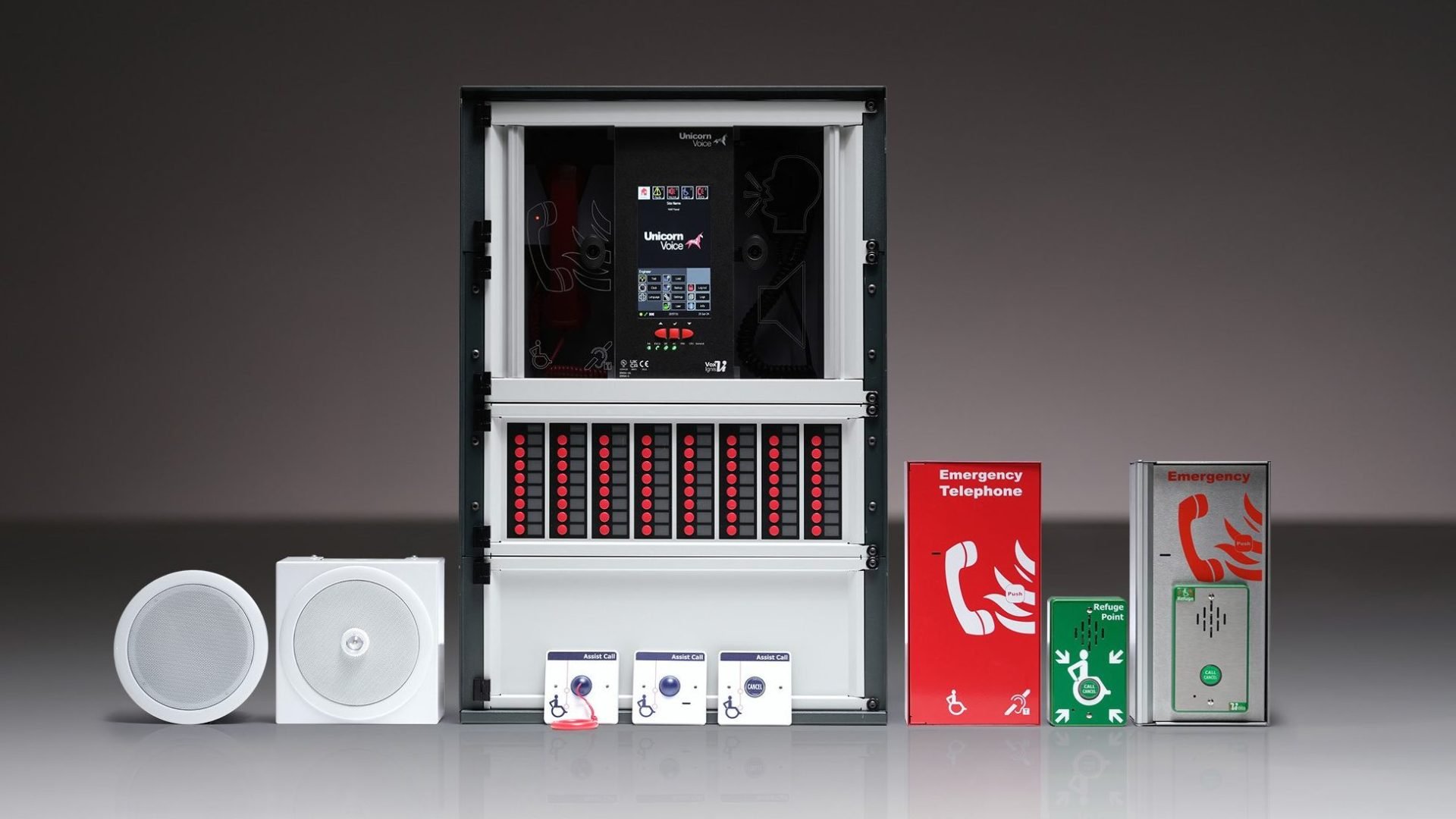
Bristol's newest high-rise developments are increasingly adopting integrated "smart evacuation" systems that combine BS 5839-1 fire detection with emergency voice communication (EVC), voice alarm, and real-time occupancy monitoring. IMAF-funded installations can be future-proofed by selecting fire alarm platforms that support networked integration — allowing the common fire alarm to form the foundation of a comprehensive building safety system.
Local Expertise: Serving Bristol, Somerset, Wiltshire & Gloucestershire
Bristol: High-Rise Remediation Specialists
Bristol's city centre and Temple Meads corridor contains some of the South West's highest-density residential buildings — many of which were constructed during the 2005–2018 building boom and are now subject to post-Grenfell remediation programmes. Our Bristol HQ team has delivered Waking Watch replacement installations across multiple high-rise residential developments, working within the constraints of occupied buildings, active cladding remediation programmes, and tight IMAF application timescales.
Heritage Sensitivity in Bath & Cheltenham
South West cities including Bath and Cheltenham present unique challenges for fire alarm installations due to the prevalence of Grade I and Grade II listed buildings, conservation area controls, and sensitive architectural fabric. Our wireless fire alarm expertise means we can deliver full BS 5839-1 compliance without surface-mounted cabling, intrusive fixings, or visible trunking that would trigger planning objections or listed building consent issues. Read our full guide on wireless fire alarms for heritage buildings in Bath.
South West Based, South West Focused
Being based in Bristol means our local engineers can usually get out to an IMAF-related site survey within 24–48 hours across Bristol, Bath, Weston-super-Mare, Taunton, Bridgwater, Somerset, Wiltshire, Gloucestershire and the wider South West. Where Homes England needs a certified design and quotation before processing the grant, being local and nearby makes a real difference.
How to Apply: Our 3-Step IMAF Success Path
Step 1: Site Survey & British Standards-Certified Quote
We provide a free, no-obligation site survey to assess your building's fire alarm requirements. Our specialist design team will produce a compliant BS 5839-1 system design and detailed quotation — the exact documentation required by Homes England for your IMAF application. The survey covers:
- Building layout assessment and floor plan review
- Existing fire safety infrastructure audit
- Sounder coverage calculations to meet BS 5839-1 sound level requirements
- Wireless signal propagation survey (for wireless installations)
- Integration requirements with existing BS 8629 or EVC systems
Step 2: Application Support
Navigating the Cladding Safety Scheme platform can be complex. We support the Responsible Person through the application process, ensuring all technical documentation — system design, British Standards certification evidence, installation timeline, and cost breakdown — meets Homes England's submission requirements. Our team has direct experience with successful IMAF (and predecessor WWRF) applications and understands exactly what the assessors need to approve funding quickly.
Step 3: Rapid Installation & Waking Watch Cessation
Once funding is approved, our specialist wireless fire alarm installation teams mobilise rapidly — typically commencing on-site within 5 working days of approval confirmation. For a typical 50–100 flat building, installation, commissioning, and handover is completed within 5–10 working days. Upon successful commissioning and sign-off, the Waking Watch can be formally stood down, immediately eliminating the ongoing monthly cost burden on leaseholders.
Why Choose Affinity Fire & Security for Your IMAF Project?
- Standards-compliant — the third-party certification required for IMAF-funded installations
- Standards-compliant — the highest level of quality assurance for fire alarm design and installation
- Wireless fire alarm specialists — experienced in rapid deployment with minimal resident disruption
- South West based — Bristol HQ with 24–48 hour site survey response across the region
- IMAF application experience — proven experience with Homes England funding submissions
- Ongoing maintenance — BS 5839-1 compliant servicing to protect your investment and maintain fund compliance
Don't Let Leaseholders Carry the Burden
The IMAF fund represents a time-limited opportunity to eliminate Waking Watch costs, achieve full regulatory compliance, and protect your leaseholders from spiralling service charges. With the 6 April 2026 regulations now in force, the window for proactive action is narrowing — buildings without a clear transition plan risk enforcement action from the local fire authority.
Contact our Bristol HQ today for a free IMAF eligibility survey and BS 5839-1 system quotation. Our team will guide you from initial survey through to funded installation and Waking Watch cessation — typically within weeks, not months.
Talk to a Local Engineer
If you would like honest advice, a clear written quote, or help with compliance paperwork,get in touch with our team. We are a small, experienced South West team, and we look after every customer properly — no pushy sales, no hidden extras, and documentation you can rely on.